Minimum order $150 — Pay with Bitcoin and get 10% OFF Free Shipping over $500

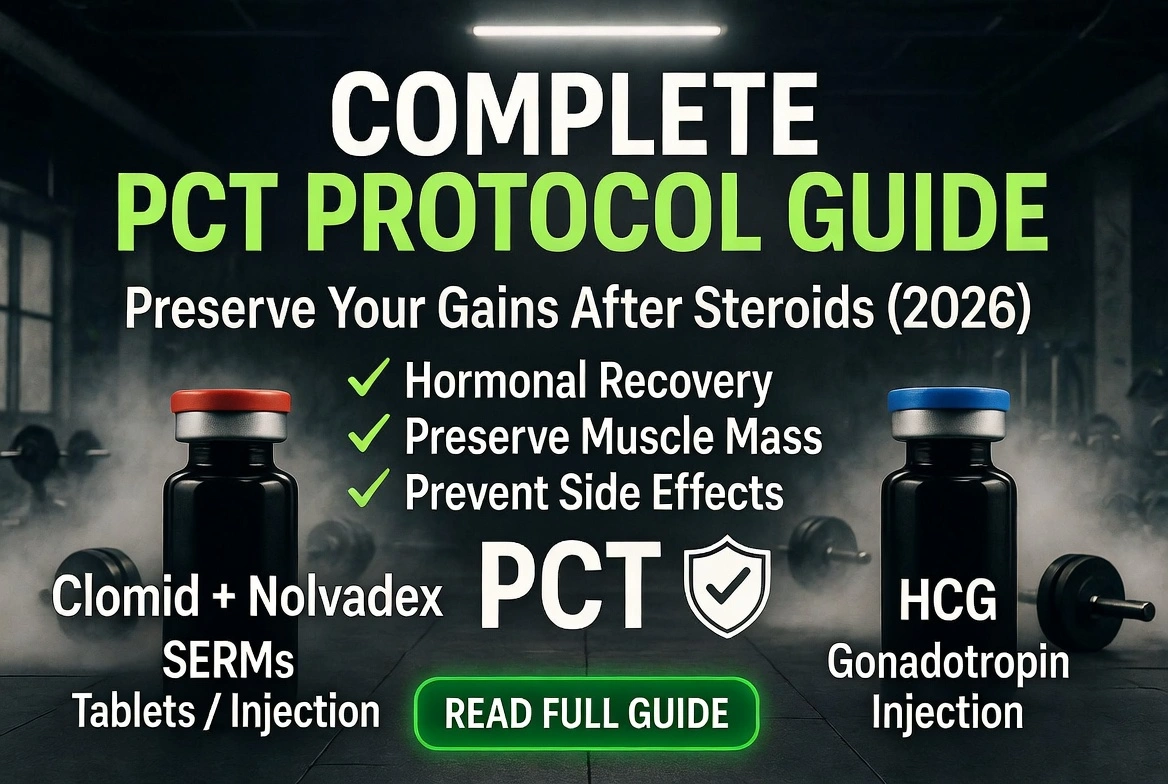
PCT Protocol: The Complete Guide to Preserving Your Gains After a Steroid Cycle

How to Restore Natural Testosterone Production and Keep Your Hard-Earned Muscle
Introduction: Why PCT Is Non-Negotiable
You’ve just completed a successful 12-week testosterone cycle. You’ve gained 20 pounds, your strength has skyrocketed, and you’re looking the best you’ve ever looked. But now comes the most critical phase that separates smart users from those who lose everything: Post Cycle Therapy (PCT).
Skip PCT, and you’ll watch your gains evaporate within weeks. Worse, you risk months—even years—of hormonal dysfunction, crushing fatigue, depression, and sexual dysfunction.
The harsh reality: When you inject exogenous testosterone, your body completely shuts down its own production. Without proper PCT, you could be waiting 6-12 months for natural recovery, losing all your muscle in the process.
This comprehensive guide provides science-backed PCT protocols used by professional athletes and bodybuilders to restore hormonal function, preserve muscle gains, and maintain the physique you worked so hard to build.
Understanding HPTA Suppression: What Happens During a Cycle
The Hypothalamic-Pituitary-Testicular Axis (HPTA)
Your natural testosterone production operates through a feedback loop:
- Hypothalamus releases GnRH (Gonadotropin-Releasing Hormone)
- Pituitary gland receives GnRH signal and releases LH (Luteinizing Hormone) and FSH (Follicle-Stimulating Hormone)
- Testicles respond to LH/FSH by producing testosterone and sperm
- Testosterone levels rise, signaling the hypothalamus to reduce GnRH (negative feedback)
This elegant system maintains testosterone within a normal range (300-1,000 ng/dL).
What Steroids Do to This System
When you inject testosterone or other anabolic steroids, your body detects supraphysiological hormone levels and thinks: “We have plenty of testosterone—no need to make more.”
The shutdown cascade:
- Hypothalamus stops releasing GnRH
- Pituitary stops releasing LH and FSH
- Testicles stop producing testosterone
- Testicles shrink (atrophy) from disuse
- Sperm production ceases
This happens within 2-4 weeks of starting exogenous hormones.
After your cycle ends, testosterone levels crash to nearly zero because:
- You’re no longer injecting it
- Your natural production is completely shut down
- The HPTA axis remains suppressed for weeks or months
Without PCT, you’re in hormonal limbo with testosterone levels below a natural woman’s, leading to catastrophic muscle loss and devastating side effects.
The Consequences of Skipping PCT
Physical Consequences
Muscle Loss:
- Loss of 50-70% of gains within 4-8 weeks
- Severe catabolism (muscle breakdown)
- Strength plummets rapidly
Fat Gain:
- Increased body fat storage, especially abdominal
- Loss of vascularity and muscle hardness
- “Soft” appearance despite previous conditioning
Sexual Dysfunction:
- Complete loss of libido
- Erectile dysfunction
- Testicular atrophy becomes permanent (in severe cases)
Mental and Emotional Consequences
Depression and Mood Disorders:
- Severe depression (clinical in some cases)
- Anxiety and panic attacks
- Irritability and emotional instability
Cognitive Impairment:
- Brain fog and poor concentration
- Memory problems
- Lack of motivation and drive
Energy Depletion:
- Chronic fatigue
- Insomnia or hypersomnia
- Complete loss of training motivation
Long-Term Health Risks
Permanent Hypogonadism: Without PCT, some users never fully recover natural testosterone production and require lifelong testosterone replacement therapy (TRT).
Cardiovascular Stress: The hormonal crash creates an inflammatory state that stresses the cardiovascular system.
Bone Density Loss: Low testosterone accelerates bone density reduction, increasing fracture risk.
The bottom line: PCT isn’t optional—it’s mandatory for anyone who values their health and wants to keep their gains.
The Science Behind PCT Medications
SERMs: Selective Estrogen Receptor Modulators
PCT relies primarily on SERMs, which block estrogen receptors in the hypothalamus and pituitary, tricking your body into thinking estrogen is low.
Why this works: Your body converts testosterone into estrogen. When it detects “low estrogen” (because SERMs block the receptors), it responds by increasing GnRH, LH, and FSH production to stimulate the testicles.
The two primary SERMs:
1. Nolvadex (Tamoxifen Citrate)
How it works: Blocks estrogen receptors specifically in breast tissue and the hypothalamus/pituitary, stimulating LH and FSH production without blocking beneficial estrogen elsewhere.
Benefits:
- Highly effective at restarting HPTA
- Prevents gynecomastia (breast tissue development)
- Fewer side effects than Clomid
- Well-tolerated by most users
Typical dosing:
- Weeks 1-2: 40mg daily
- Weeks 3-4: 20mg daily
2. Clomid (Clomiphene Citrate)
How it works: Similar to Nolvadex but more potent, blocking estrogen receptors and strongly stimulating LH/FSH release.
Benefits:
- More powerful LH/FSH stimulation
- Faster initial recovery
- Can be combined with Nolvadex for stubborn recovery
Drawbacks:
- More side effects (vision issues, emotional instability)
- Estrogen receptor blockage can negatively affect lipids and mood
Typical dosing:
- Weeks 1-2: 50mg daily
- Weeks 3-4: 25mg daily
Nolvadex vs. Clomid: Modern evidence favors Nolvadex as the superior PCT drug due to better side effect profile and equal efficacy. Clomid is reserved for cases where Nolvadex alone proves insufficient.
Complete PCT Protocols by Cycle Type
Protocol 1: Standard Testosterone-Only Cycle PCT
For cycles of:
- Testosterone Enanthate/Cypionate 300-500mg/week for 12-16 weeks
When to start PCT:
- 2 weeks after last injection (allows ester to clear)
PCT Protocol:
Week 1-2: Nolvadex 40mg daily
Week 3-4: Nolvadex 20mg daily
Expected timeline:
- Week 1: Minimal changes (ester still clearing)
- Week 2: LH/FSH begin rising
- Week 3-4: Testosterone production restarts
- Week 6-8: Near-normal testosterone levels (verify with blood work)
Protocol 2: Enhanced Recovery PCT (Nolvadex + Clomid)
For cycles of:
- Higher doses (600-750mg/week testosterone)
- Multiple compounds stacked
- Cycles longer than 16 weeks
PCT Protocol:
Week 1-2: Nolvadex 40mg + Clomid 50mg daily
Week 3-4: Nolvadex 20mg + Clomid 25mg daily
Rationale: The combination provides dual-pathway stimulation for faster, more complete recovery in users with more severe HPTA suppression.
Protocol 3: HCG-Assisted PCT (Advanced)
For cycles of:
- Long-term cycles (20+ weeks)
- Very suppressive compounds (Trenbolone, Deca)
- Users who want maximum recovery assurance
During cycle:
HCG 250 IU twice weekly throughout entire cyclePCT Protocol:
Week 1 (HCG bridge): HCG 500 IU every other day
Week 2 (transition week): Stop HCG
Week 3-4: Nolvadex 40mg daily
Week 5-6: Nolvadex 20mg daily
Why HCG helps: HCG mimics LH, keeping testicles “awake” during the cycle. This prevents severe atrophy and makes recovery faster and easier.
Critical timing: Stop HCG at least 3-4 days before starting Nolvadex. Running both simultaneously can desensitize LH receptors.
Optimizing Your PCT: Beyond Medications
Training During PCT
The Golden Rule: Maintain, Don’t Gain
Your body is in a catabolic state. Trying to push for new PRs will accelerate muscle loss.
Training adjustments:
- Reduce volume by 30-40%
- Maintain intensity (keep weights heavy but reduce sets/reps)
- Focus on compound movements
- Reduce training frequency if needed (4 days/week instead of 6)
- Listen to your body—overtraining is disastrous during PCT
Nutrition During PCT
Caloric intake: Eat at maintenance or a slight surplus (200-300 calories above maintenance). Do NOT cut calories.
Protein: Increase to 1.2-1.5g per lb bodyweight to combat catabolism.
Carbohydrates: Keep carbs relatively high to maintain training performance and prevent muscle loss.
Fats: Ensure adequate healthy fats (0.4-0.5g per lb) to support hormone production.
Supplements for PCT support:
- Vitamin D3: 5,000 IU daily (supports testosterone production)
- Zinc: 30mg daily (essential mineral for testosterone synthesis)
- Magnesium: 400mg before bed (improves sleep and recovery)
- Ashwagandha: 600mg daily (reduces cortisol, supports hormones)
- D-Aspartic Acid: 3g daily (may boost LH and testosterone)
Sleep and Stress Management
Sleep is critical: Aim for 8-9 hours of quality sleep. Testosterone is produced primarily during deep sleep.
Stress reduction: High cortisol during PCT will crush testosterone recovery. Practice stress management through meditation, walks, or other relaxation techniques.
Blood Work: Monitoring Your Recovery
Pre-PCT Blood Work (Immediately After Cycle)
Essential tests:
- Total Testosterone (will be near zero)
- Free Testosterone
- LH and FSH (should be undetectable)
- Estradiol
- Liver enzymes (AST, ALT)
- Lipid panel
Purpose: Establishes your suppressed baseline.
Mid-PCT Blood Work (Week 3 of PCT)
Monitor:
- LH and FSH (should be rising)
- Total Testosterone (should be starting to climb)
- Estradiol (ensure it’s not too low from SERMs)
Purpose: Confirms PCT medications are working.
Post-PCT Blood Work (4-6 Weeks After Completing PCT)
Essential tests:
- Total Testosterone (goal: return to pre-cycle baseline)
- Free Testosterone
- LH and FSH (should be in normal range)
- Estradiol
- Full metabolic and lipid panels
Success criteria:
- Testosterone: Within 10-15% of pre-cycle levels
- LH/FSH: Detectable and in normal range
- You feel normal (libido returned, energy restored)
If you haven’t recovered: Extend PCT by 2-4 more weeks or consult an endocrinologist. Some cases require medical intervention.
Common PCT Mistakes to Avoid
1. Starting PCT Too Early If the steroid ester hasn’t cleared your system, PCT drugs can’t work effectively. Always wait the appropriate time based on ester half-life.
2. Using Inadequate Doses 20mg Nolvadex for all 4 weeks is insufficient. Front-load with higher doses to kickstart recovery.
3. Running PCT Too Short 4 weeks is the minimum. Some users benefit from 6 weeks, especially after long or harsh cycles.
4. Crashing Estrogen with AI During PCT Don’t use Arimidex or other AIs during PCT unless absolutely necessary. You need estrogen for proper HPTA function.
5. Immediately Starting Another Cycle Your body needs time off. Follow the “time on = time off” rule minimum. After a 16-week cycle + 4-week PCT, take at least 20 weeks off.
6. Ignoring Blood Work You cannot confirm recovery without blood tests. “Feeling fine” doesn’t mean your hormones are normal.
7. Cutting Calories During PCT Caloric restriction + low testosterone = rapid muscle loss. Maintain or slightly increase calories.
Conclusion: Protect Your Investment
You invested time, money, and effort into building your physique during your cycle. PCT is your insurance policy—protecting those gains and safeguarding your long-term health.
Remember:
- PCT is mandatory, not optional
- Use proven protocols (Nolvadex is king)
- Monitor recovery with blood work
- Adjust training and nutrition to support recovery
- Give your body adequate time off before the next cycle
Success in bodybuilding isn’t just about the gains you make on-cycle—it’s about the gains you keep afterward.
Run your PCT properly, and you’ll maintain 60-80% of your muscle gains, restore your natural testosterone, and be ready to push even further in your next cycle.
Ready to plan your PCT?
Browse our pharmaceutical-grade PCT medications with verification codes.
[SHOP NOLVADEX] | [SHOP CLOMID] | [EXPLORE HCG]
Need personalized PCT guidance? Our expert team is available 24/7 to help you design the optimal recovery protocol.
📧 support@primehormonenova.com
💬 Live Chat
📱 Telegram: @PrimeHormoneNova
Disclaimer: For research and educational purposes only. Consult a healthcare professional before using any performance-enhancing substances or PCT medications.