Minimum order $150 — Pay with Bitcoin and get 10% OFF Free Shipping over $500
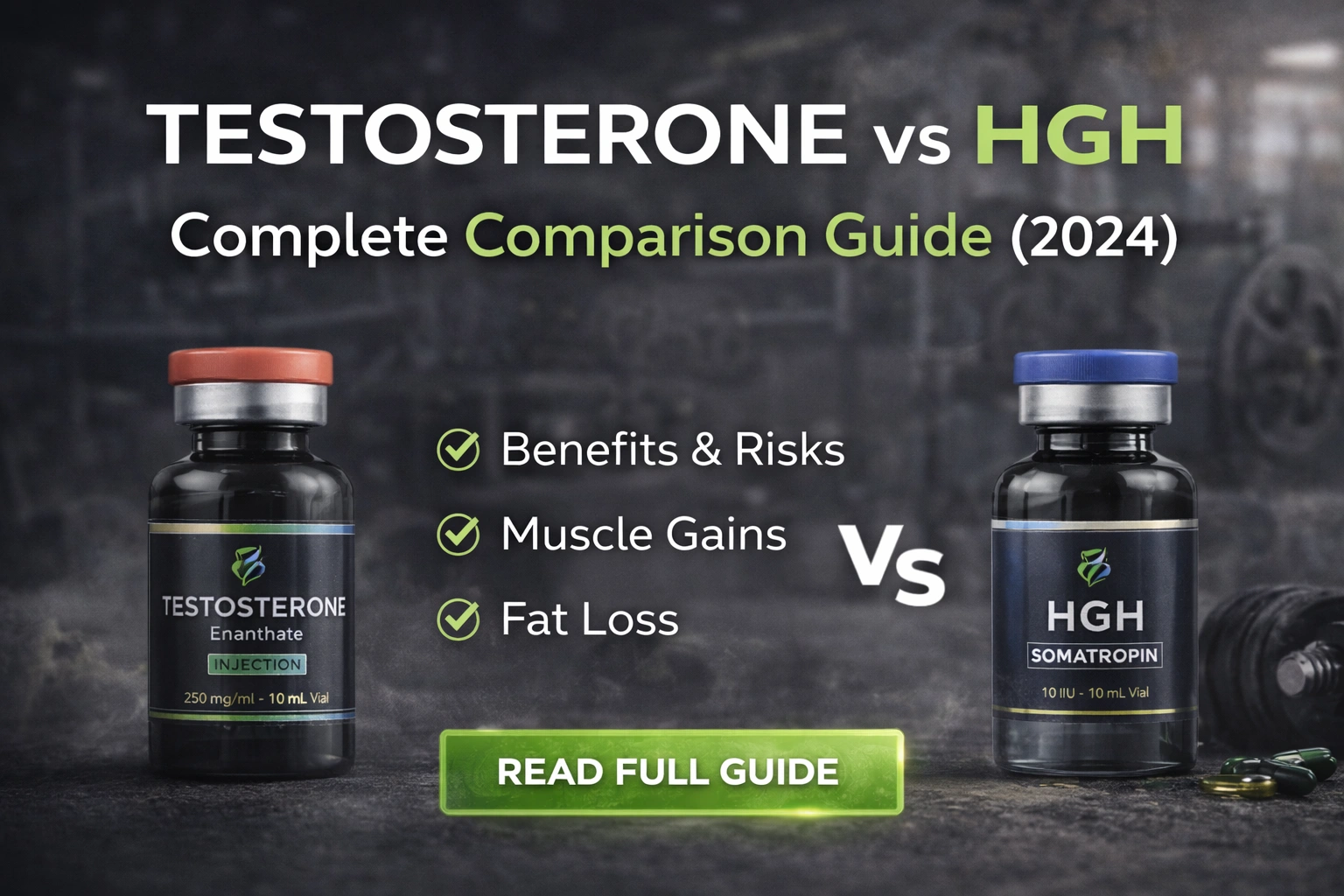
Testosterone vs HGH: Which Performance Enhancer Is Right for Your Goals?

The Ultimate Evidence-Based Comparison for Athletes and Bodybuilders
Introduction: The Great Debate
Walk into any serious gym, browse any bodybuilding forum, or talk to competitive athletes, and you’ll inevitably encounter the same question: Should I use testosterone or HGH?
This isn’t just idle curiosity. The choice between these two powerful compounds can determine whether you achieve your physique goals efficiently or waste thousands of dollars on suboptimal results.
Both testosterone and human growth hormone (HGH) are legendary in the world of performance enhancement, but they work through fundamentally different mechanisms, produce distinct results, and come with their own unique considerations.
Here’s what makes this decision complex:
Testosterone has been the gold standard of muscle building for over 70 years. It’s affordable, well-researched, and delivers dramatic muscle gains quickly. Yet it comes with androgenic side effects that some users find intolerable.
HGH, meanwhile, promises the holy grail: muscle growth, fat loss, improved skin quality, better sleep, enhanced recovery, and even potential anti-aging benefits. But it’s expensive, requires months to show results, and its effects are more subtle.
In this comprehensive guide, you’ll discover:
✓ The exact mechanisms by which each hormone builds muscle and burns fat
✓ Side-by-side comparison of effects, timelines, and results
✓ Complete cost analysis over typical cycle lengths
✓ When testosterone is superior, when HGH wins, and when combining them makes sense
✓ Dosing protocols used by professional athletes and bodybuilders
✓ Real-world expectations based on current scientific evidence
Whether you’re a competitive bodybuilder planning your next contest prep, an aging athlete looking to reclaim lost vitality, or simply someone researching the most effective performance enhancement options, this guide will give you the knowledge to make an informed decision.
Let’s dive deep into the science, practical applications, and real-world considerations of testosterone versus HGH.
<a name=”understanding-testosterone”></a>
Understanding Testosterone: The Foundation of Masculinity
What Is Testosterone?
Testosterone is the primary male sex hormone and anabolic steroid produced naturally in the Leydig cells of the testes (in men) and, to a much lesser extent, in the ovaries and adrenal glands (in women).
It’s responsible for the development of male sexual characteristics during puberty—deepening voice, facial hair growth, increased muscle mass, bone density, and sex drive. But its effects go far beyond reproduction.
Key Functions of Testosterone:
- Protein synthesis stimulation – Directly signals muscle cells to build new proteins
- Nitrogen retention – Creates an anabolic environment in muscle tissue
- Red blood cell production – Increases oxygen-carrying capacity
- Glycogen synthesis – Enhances muscle fuel storage and endurance
- IGF-1 elevation – Increases insulin-like growth factor production locally in muscles
- Satellite cell activation – Promotes muscle cell proliferation and repair
Types of Testosterone Used in Performance Enhancement
When athletes and bodybuilders refer to “testosterone,” they’re typically talking about exogenous (externally administered) testosterone esters:
Common Testosterone Esters:
- Testosterone Enanthate – Half-life ~7 days, injected twice weekly
- Testosterone Cypionate – Half-life ~8 days, similar to Enanthate
- Testosterone Propionate – Half-life ~2 days, requires daily or every-other-day injection
- Testosterone Suspension – No ester (pure testosterone), half-life <24 hours
- Sustanon – Blend of four esters providing multi-release profile
For performance purposes, Enanthate and Cypionate are most popular due to convenient injection frequency and stable blood levels.
How Testosterone Builds Muscle
Testosterone promotes muscle hypertrophy through several powerful mechanisms:
1. Androgen Receptor Activation
Testosterone binds to androgen receptors in muscle cells, triggering genetic transcription that increases protein synthesis. This is the primary anabolic pathway.
2. Satellite Cell Proliferation
Satellite cells are muscle stem cells. Testosterone activates these dormant cells, allowing them to fuse with existing muscle fibers and donate their nuclei. More nuclei = greater capacity for muscle growth.
3. IGF-1 Upregulation
Testosterone significantly increases local IGF-1 production in muscle tissue. IGF-1 is powerfully anabolic and works synergistically with testosterone.
4. Inhibition of Cortisol
Testosterone blocks cortisol receptors, preventing muscle breakdown (catabolism) and creating a more anabolic hormonal environment.
5. Enhanced Recovery
By reducing inflammation and accelerating cellular repair processes, testosterone allows you to train harder and more frequently without overtraining.
Typical Results from Testosterone Cycles
Beginner Cycle (500mg/week for 12 weeks):
- Muscle gain: 15-25 lbs (10-15 lbs lean muscle after water loss)
- Strength increase: 25-40% on major lifts
- Fat loss: Moderate (improved nutrient partitioning)
- Timeline: Noticeable changes in 3-4 weeks, peak results at weeks 8-12
Intermediate Cycle (750mg/week for 16 weeks):
- Muscle gain: 25-35 lbs total (15-20 lbs lean)
- Strength increase: 40-60%
- More pronounced vascularity and muscle hardness
- Timeline: Earlier visible changes (week 2-3)
Advanced Protocols (1000mg+ weekly):
- Diminishing returns per mg beyond 750mg
- Significantly higher side effect risk
- Used by competitive bodybuilders in mass-gaining phases
Advantages of Testosterone
✓ Proven track record – 70+ years of use in clinical and athletic settings
✓ Rapid results – Visible changes within 3-4 weeks
✓ Powerful anabolic effects – Among the most effective muscle builders
✓ Affordable – Fraction of the cost of HGH
✓ Well-researched – Extensive scientific literature on dosing and effects
✓ Versatile – Effective for bulking, cutting, and recomposition
✓ Increased libido and mood – Psychological benefits often reported
Limitations of Testosterone
✗ Aromatization to estrogen – Requires AI management to prevent gyno, water retention
✗ HPTA suppression – Complete shutdown of natural production
✗ Androgenic side effects – Acne, hair loss (if genetically predisposed), aggression
✗ Cardiovascular stress – Negative impact on lipid profiles, blood pressure
✗ Requires PCT – Must restore natural production after cycle
✗ Detection in drug tests – Long detection times for tested athletes
<a name=”understanding-hgh”></a>
Understanding HGH: The Youth Hormone
What Is Human Growth Hormone?
Human Growth Hormone (HGH), also known as somatropin, is a peptide hormone produced by the pituitary gland. It’s essential for growth during childhood and maintains tissue and organ function throughout life.
Unlike testosterone (a steroid hormone), HGH is a 191-amino acid polypeptide chain that acts through different cellular mechanisms.
Primary Functions of HGH:
- Cell reproduction and regeneration – Stimulates growth of virtually all tissues
- Lipolysis promotion – Directly signals fat cells to release stored triglycerides
- Protein synthesis – Increases amino acid uptake and protein production
- Glucose regulation – Opposes insulin action (can increase blood sugar)
- IGF-1 production – Stimulates liver to produce IGF-1, the primary mediator of HGH’s effects
- Collagen synthesis – Improves skin, connective tissue, and bone health
Natural HGH Production and Decline
HGH secretion follows a pulsatile pattern, with the highest levels occurring during deep sleep. Production peaks during puberty and declines steadily with age:
- Age 20: ~500 mcg/day average
- Age 40: ~200 mcg/day (60% decline)
- Age 60: ~25 mcg/day (95% decline)
This age-related decline is associated with:
- Loss of muscle mass (sarcopenia)
- Increased body fat, especially visceral fat
- Decreased bone density
- Reduced skin elasticity
- Slower recovery from injuries
- Cognitive decline
This is why HGH is often called the “anti-aging hormone.”
How HGH Works: The IGF-1 Pathway
HGH doesn’t directly cause most of its effects. Instead, it works primarily through Insulin-Like Growth Factor 1 (IGF-1), produced mainly in the liver in response to HGH.
The HGH → IGF-1 Cascade:
- HGH is injected subcutaneously
- HGH travels to the liver
- Liver produces and releases IGF-1
- IGF-1 circulates systemically and locally in tissues
- IGF-1 binds to receptors on muscle, fat, and other cells
- Cellular effects occur: protein synthesis, lipolysis, cell division
This is why HGH results take time – you’re not getting direct hormone action; you’re waiting for downstream IGF-1 production and cellular changes.
Muscle Growth Mechanisms of HGH
1. Hyperplasia (New Muscle Cell Formation)
This is HGH’s unique advantage. While testosterone primarily causes hypertrophy (existing cells getting bigger), HGH can trigger hyperplasia—the creation of entirely new muscle cells.
These new cells remain even after you stop using HGH, giving you greater potential for future muscle growth.
2. Enhanced Protein Synthesis
IGF-1 increases amino acid uptake into cells and stimulates ribosomal protein production, similar to testosterone but through different cellular pathways.
3. Satellite Cell Activation
Like testosterone, HGH activates satellite cells, but it does so through different signaling mechanisms (PI3K/Akt pathway vs. androgen receptor pathway).
4. Connective Tissue Strengthening
HGH dramatically increases collagen production, strengthening tendons, ligaments, and cartilage. This allows you to handle heavier loads and reduces injury risk.
Fat Loss Mechanisms of HGH
HGH is arguably the most powerful fat-burning hormone in the human body:
1. Direct Lipolysis
HGH binds to receptors on fat cells (adipocytes) and directly signals them to break down stored triglycerides into free fatty acids for energy use.
2. Increased Fat Oxidation
Not only does HGH release fat from storage, it also increases the rate at which your body burns fat for fuel.
3. Preferential Visceral Fat Loss
Studies show HGH specifically targets stubborn visceral (organ-surrounding) and abdominal subcutaneous fat—the hardest fat to lose through diet alone.
4. Improved Insulin Sensitivity (Paradoxically)
Despite HGH’s short-term antagonistic effect on insulin, long-term use can improve body composition to the point where insulin sensitivity actually improves.
Typical Results from HGH Cycles
Moderate Dose Protocol (4 IU/day for 6 months):
- Muscle gain: 5-10 lbs lean tissue
- Fat loss: 10-15 lbs (particularly abdominal)
- Skin quality improvement: Noticeable (reduced wrinkles, better elasticity)
- Recovery enhancement: Significant (injuries heal faster)
- Timeline: Subtle changes at 4-6 weeks, obvious results at 3-4 months
Higher Dose Protocol (8-10 IU/day for 6+ months):
- Muscle gain: 10-20 lbs lean tissue
- Fat loss: 15-25 lbs
- Dramatic improvements in skin, hair, nails
- Enhanced sleep quality
- Timeline: Results begin around week 8, continue improving for duration of use
Important Note: HGH is a marathon, not a sprint. Users often don’t see significant changes until month 3-4.
Advantages of HGH
✓ Unique hyperplasia effects – Creates new muscle cells
✓ Superior fat loss – Especially stubborn abdominal fat
✓ Anti-aging benefits – Improved skin, hair, sleep quality
✓ Injury recovery – Accelerated healing of tendons and ligaments
✓ No estrogenic side effects – Doesn’t aromatize
✓ No androgenic effects – No hair loss, acne, aggression
✓ Improved sleep – Many users report deeper, more restful sleep
✓ Enhanced cognitive function – Improved focus and memory
✓ No PCT required – Doesn’t suppress natural testosterone
Limitations of HGH
✗ Extremely expensive – 10-20x the cost of testosterone
✗ Slow results – Takes 3-4 months to see significant changes
✗ Requires long cycles – Minimum 6 months for full benefits
✗ Daily injections – Cannot use long-acting esters
✗ Carpal tunnel risk – Water retention in extremities
✗ Potential insulin resistance – Can raise blood glucose
✗ Controversial cancer concerns – May accelerate existing tumor growth
✗ Widely counterfeited – Many fake products on black market
<a name=”muscle-growth”></a>
Head-to-Head Comparison: Effects on Muscle Growth
Testosterone for Muscle Building
Speed of Results: ⭐⭐⭐⭐⭐ Testosterone delivers rapid, noticeable muscle growth within the first month.
Magnitude of Gains: ⭐⭐⭐⭐⭐ 15-25 lbs of total weight gain in 12 weeks is typical for beginners.
Quality of Gains: Significant water retention accompanies muscle growth. Expect to lose 30-40% of total weight gained when you come off (water and glycogen, not muscle).
Mechanism: Primarily hypertrophy (existing muscle fibers enlarge). Minimal hyperplasia.
Keepable Gains: With proper PCT and maintenance of training/nutrition, you can keep 60-70% of the lean mass gained.
HGH for Muscle Building
Speed of Results: ⭐⭐☆☆☆ Muscle growth is slow and gradual. Minimal visible changes in the first 6-8 weeks.
Magnitude of Gains: ⭐⭐⭐☆☆ 5-15 lbs of lean tissue over 6 months at moderate doses.
Quality of Gains: Extremely high-quality, dry gains with minimal water retention. What you see is real muscle tissue.
Mechanism: Combination of hypertrophy and hyperplasia (new muscle cell creation). This is HGH’s unique advantage.
Keepable Gains: 90-95% of muscle gained from HGH is permanent, assuming you maintain training and nutrition. The new muscle cells remain.
The Verdict: Muscle Growth Winner
For rapid, dramatic size increase: Testosterone wins decisively.
For slow, permanent, high-quality gains: HGH wins.
For most bodybuilders: Testosterone is the better choice for pure muscle building due to speed and magnitude of results. HGH is better suited for enhancing an already advanced physique or for long-term body recomposition.
<a name=”fat-loss”></a>
Fat Loss Capabilities: Which Burns More?
Testosterone for Fat Loss
Direct Fat-Burning Effect: ⭐⭐⭐☆☆ Testosterone does increase metabolic rate and improve nutrient partitioning, but it’s not primarily a fat-loss drug.
How Testosterone Aids Fat Loss:
- Increased muscle mass – Higher basal metabolic rate
- Improved nutrient partitioning – Calories preferentially go to muscle rather than fat
- Enhanced training intensity – More calories burned during workouts
- Slight metabolic boost – Direct thermogenic effect
Realistic Expectations: On a 500mg/week testosterone cycle with proper diet, expect 5-10 lbs of fat loss over 12 weeks (while simultaneously building muscle).
Caveat: Testosterone’s estrogenic side effects can cause water retention, masking fat loss and making you look “softer” even as body fat decreases.
HGH for Fat Loss
Direct Fat-Burning Effect: ⭐⭐⭐⭐⭐ HGH is one of the most powerful fat-burning agents available.
How HGH Burns Fat:
- Direct lipolysis – Signals fat cells to release stored fat
- Increased fat oxidation – Body preferentially burns fat for fuel
- Targets stubborn fat – Particularly effective on abdominal and visceral fat
- Preserves muscle during dieting – Strong anti-catabolic effect
Realistic Expectations: On a 4-6 IU/day protocol for 6 months with proper diet, expect 15-25 lbs of fat loss while maintaining or even building muscle.
Special Benefit: HGH specifically targets the hardest-to-lose fat deposits: lower abdominal subcutaneous fat and dangerous visceral (organ-surrounding) fat.
The Verdict: Fat Loss Winner
HGH wins decisively for pure fat-burning effects.
HGH’s direct lipolytic action, preferential targeting of stubborn fat, and ability to preserve muscle during caloric deficits make it far superior to testosterone for body recomposition and cutting phases.
Many competitive bodybuilders use HGH specifically during contest prep for this reason.
<a name=”recovery”></a>
Recovery and Healing Properties
Testosterone and Recovery
Muscle Recovery: ⭐⭐⭐⭐☆ Significantly accelerates muscle tissue repair between workouts.
Injury Healing: ⭐⭐⭐☆☆ Modest improvements in healing time for muscle injuries.
Connective Tissue: ⭐⭐☆☆☆ Minimal direct benefit to tendons, ligaments, and cartilage. May even increase injury risk if you lift heavier weights than your connective tissue can handle.
Mechanisms:
- Increased protein synthesis in damaged muscle fibers
- Reduced inflammation
- Enhanced satellite cell activation
- Improved sleep quality (in some users)
HGH and Recovery
Muscle Recovery: ⭐⭐⭐⭐⭐ Exceptional muscle recovery, allowing for more frequent intense training.
Injury Healing: ⭐⭐⭐⭐⭐ Dramatically accelerates healing of injuries, sometimes by 50% or more.
Connective Tissue: ⭐⭐⭐⭐⭐ HGH’s standout benefit. Significantly strengthens tendons, ligaments, and cartilage through enhanced collagen synthesis.
Mechanisms:
- Massive increase in collagen production
- Enhanced cellular regeneration in all tissue types
- Improved sleep quality (deeper REM and slow-wave sleep)
- Reduced systemic inflammation
Real-World Applications: Professional athletes often use HGH specifically to recover from injuries like torn tendons, ligament damage, and cartilage degeneration—injuries that normally take 6-12 months to heal can improve in 3-4 months with HGH.
The Verdict: Recovery Winner
HGH wins comprehensively, especially for connective tissue healing.
If you’re an aging athlete dealing with chronic joint issues, tendon problems, or recovering from injury, HGH offers benefits testosterone simply cannot match.
<a name=”anti-aging”></a>
Anti-Aging and Longevity Benefits
Testosterone and Aging
Cognitive Function: ⭐⭐⭐⭐☆ Improves memory, focus, and mood in men with low baseline testosterone.
Skin Quality: ⭐⭐☆☆☆ Minimal effect. May actually worsen skin through increased oiliness and acne.
Energy Levels: ⭐⭐⭐⭐⭐ Dramatic improvements in vitality, motivation, and drive.
Sexual Function: ⭐⭐⭐⭐⭐ Significantly improves libido, erectile function, and sexual performance.
Bone Density: ⭐⭐⭐⭐☆ Increases bone mineral density, reducing osteoporosis risk.
HGH and Aging
Cognitive Function: ⭐⭐⭐⭐☆ Improves memory, neuroplasticity, and may offer neuroprotective effects.
Skin Quality: ⭐⭐⭐⭐⭐ Dramatic improvements: reduced wrinkles, increased elasticity, better skin tone and thickness.
Energy Levels: ⭐⭐⭐⭐☆ Improved vitality and stamina, though less pronounced than testosterone.
Sexual Function: ⭐⭐☆☆☆ Minimal direct impact on libido or erectile function.
Bone Density: ⭐⭐⭐⭐⭐ Powerful bone-building effects through increased osteoblast activity.
Hair and Nails: ⭐⭐⭐⭐⭐ Faster growth, improved quality and thickness.
Sleep Quality: ⭐⭐⭐⭐⭐ Deepens REM and slow-wave sleep significantly.
Longevity Markers: HGH improves several biomarkers associated with longevity: telomere length, cellular senescence markers, and organ function.
The Verdict: Anti-Aging Winner
HGH wins for comprehensive anti-aging effects.
If your primary goal is to look younger, feel more vital, and potentially extend healthspan, HGH offers broader benefits. However, testosterone is superior specifically for libido and sexual function.
Ideal scenario: Combining physiological testosterone doses (100-200mg/week TRT) with moderate HGH (2-4 IU/day) provides comprehensive anti-aging benefits.
<a name=”side-effects”></a>
Side Effects and Safety Profile
Testosterone Side Effects
Common (>10% of users):
- Acne and oily skin
- Water retention
- Gynecomastia (if estrogen not managed)
- Testicular atrophy
- Suppression of natural testosterone
- Increased hematocrit (thick blood)
Moderate (1-10% of users):
- Hair loss (if genetically predisposed)
- Mood changes and aggression
- Insomnia or sleep disturbances
- Prostate enlargement
- Reduced fertility
Cardiovascular Risks:
- Negative impact on lipid profile (lower HDL, higher LDL)
- Increased blood pressure
- Left ventricular hypertrophy (with long-term use)
- Elevated cardiovascular event risk
Serious (rare but possible):
- Liver toxicity (primarily with oral forms)
- Severe polycythemia
- Blood clots or stroke
- Heart attack
Mitigation Strategies:
- Use AI to control estrogen
- Donate blood if hematocrit rises
- Maintain cardiovascular exercise
- Monitor blood work regularly
- Run proper PCT
HGH Side Effects
Common (>10% of users):
- Carpal tunnel syndrome (hand numbness/tingling)
- Joint pain (usually temporary)
- Water retention (peripheral edema)
- Increased blood glucose levels
- Mild insulin resistance
Moderate (1-10% of users):
- Enlarged hands/feet (acromegaly-like effects with very high doses)
- Muscle pain
- Headaches
- Hypothyroidism (reduced T3 production)
Cardiovascular Risks:
- Potential for left ventricular hypertrophy (high doses, long-term)
- Fluid retention can increase blood pressure
- Mixed evidence on cardiovascular risk
Serious (rare but controversial):
- Cancer risk: HGH doesn’t cause cancer but may accelerate growth of existing tumors
- Diabetes development (with prolonged high-dose use)
- Organ enlargement (heart, intestines) at extreme doses
Mitigation Strategies:
- Use moderate doses (≤6 IU/day for most users)
- Monitor blood glucose regularly
- Consider metformin to improve insulin sensitivity
- Supplement with T3 if thyroid function drops
- Take breaks (cycling HGH)
Safety Profile Comparison
Testosterone has more immediate, obvious side effects (acne, hair loss, estrogen issues) but decades of clinical use have established clear safety parameters at reasonable doses.
HGH has fewer obvious cosmetic side effects but more subtle metabolic effects (blood sugar, thyroid) and controversial long-term concerns (cancer, organ growth).
Overall Safety Winner: Neither is “safe” in an absolute sense, but testosterone has a better-understood risk profile due to longer history of medical use.
<a name=”cost-analysis”></a>
Cost Analysis: Budget Considerations
This is where testosterone and HGH diverge dramatically.
Testosterone Costs
Pharmaceutical-grade Testosterone Enanthate/Cypionate:
- Cost per 10ml vial (250mg/ml): €40-80
- Weekly dose for 500mg/week: 2ml
- Cost per 12-week cycle: €400-800
- Total cycle cost including ancillaries (AI, PCT): €600-1,000
Underground lab (UGL) testosterone:
- Cost per 10ml vial: €25-50
- Total cycle cost: €400-700
HGH Costs
Pharmaceutical-grade HGH (Somatropin):
- Cost per 100 IU kit: €300-450
- Daily dose at 4 IU: 120 IU per month
- Cost per month: €360-540
- Cost for 6-month cycle: €2,160-3,240
Generic HGH (Chinese/overseas):
- Cost per 100 IU kit: €100-200
- Cost for 6-month cycle: €720-1,440
Important note: HGH is heavily counterfeited. Many “HGH” products contain little to no actual somatropin. Always verify with blood work (IGF-1 levels).
Cost Comparison
For equivalent cycle durations (accounting for the fact that HGH requires 6+ months vs. 12-16 weeks for testosterone):
Testosterone (16-week cycle): €600-1,000
HGH (6-month cycle): €2,160-3,240
HGH costs 3-5x more than testosterone for pharmaceutical-grade products.
The Verdict: Value for Money
Testosterone wins decisively for budget-conscious users.
HGH’s astronomical cost makes it prohibitive for most recreational users. It’s typically reserved for professional athletes, wealthy individuals, or those willing to use questionable generic HGH.
<a name=”dosing-protocols”></a>
Dosing Protocols and Administration
Testosterone Dosing
TRT (Testosterone Replacement Therapy):
- Dose: 100-200mg/week
- Goal: Restore normal physiological levels
- Injection frequency: Once or twice weekly
First Cycle (Moderate):
- Dose: 300-500mg/week
- Duration: 12-16 weeks
- Injection frequency: Twice weekly (e.g., Monday/Thursday)
Intermediate Cycle:
- Dose: 500-750mg/week
- Duration: 12-16 weeks
- Often combined with other compounds
Advanced Bodybuilding:
- Dose: 750-1,500mg/week
- Used by competitive bodybuilders
- Significantly higher risk profile
Administration: Intramuscular injection (glutes, quads, delts, ventrogluteal).
HGH Dosing
Anti-Aging/Wellness:
- Dose: 1-2 IU/day
- Duration: Ongoing (can be used indefinitely at this dose)
- Benefits: Improved skin, sleep, minor body comp changes
Fat Loss:
- Dose: 2-4 IU/day
- Duration: 6-12 months
- Benefits: Significant fat loss, moderate muscle gain
Muscle Building:
- Dose: 4-6 IU/day
- Duration: 6-12 months
- Benefits: Muscle growth, fat loss, recovery
Professional Bodybuilding:
- Dose: 8-15 IU/day
- Used during contest prep or mass-gaining phases
- Extreme cost and side effect risk
Administration: Subcutaneous injection (abdomen is most common site). Best taken first thing in the morning on an empty stomach or post-workout.
Timing Strategy: Some advanced users split the dose (e.g., 2 IU morning, 2 IU post-workout) to better mimic natural pulsatile release.
Injection Frequency
Testosterone: 1-2 times per week (depending on ester)
HGH: Daily (must be administered every day for consistent results)
<a name=”stacking”></a>
Stacking Testosterone and HGH Together
Many advanced users combine testosterone and HGH to leverage the unique benefits of both compounds.
Why Stack Them?
Synergistic Benefits:
- Testosterone builds muscle rapidly through hypertrophy
- HGH creates new muscle cells through hyperplasia
- HGH burns fat while testosterone prevents muscle loss
- Testosterone boosts libido which HGH doesn’t affect
- HGH heals connective tissue that testosterone-fueled heavy lifting stresses
Bodybuilding Applications: This stack is used by competitive bodybuilders who need maximum muscle growth, fat loss, and recovery all at once.
Sample Stack Protocol
Moderate Stack (First-time stacking):
- Testosterone: 500mg/week
- HGH: 4 IU/day
- Duration: 16-20 weeks
- Expected results: 20-30 lbs muscle, 10-15 lbs fat loss
- Cost: ~€3,500-5,000
Advanced Stack:
- Testosterone: 750mg/week
- HGH: 6-8 IU/day
- Duration: 20-24 weeks
- Often includes additional compounds (Trenbolone, Anavar, insulin)
- Cost: €6,000-10,000+
Considerations When Stacking
Benefits Amplified: The combination produces results neither compound could achieve alone. The phrase “1+1=3” is often used.
Side Effects Compounded: You’re now managing:
- Estrogen from testosterone (requires AI)
- Blood sugar from HGH (may require metformin)
- Blood pressure from both
- Suppression of natural hormones
- Cost of blood work monitoring
Not Recommended For:
- First-time users
- Budget-conscious individuals
- Those without extensive experience managing side effects
<a name=”decision-framework”></a>
Which Should You Choose? Decision Framework
Use this framework to determine which compound aligns with your goals:
Choose Testosterone If:
✓ Your primary goal is rapid muscle growth
✓ You want results in weeks, not months
✓ You have a limited budget (under €1,000 per cycle)
✓ You’re willing to manage estrogen and run PCT
✓ You want strength gains for powerlifting or strength sports
✓ You’re planning a typical 12-16 week cycle
✓ You’re younger (under 40) and natural testosterone is declining
Best for: Bodybuilders, powerlifters, athletes needing rapid mass/strength gains.
Choose HGH If:
✓ Your primary goal is high-quality fat loss while preserving muscle
✓ You want anti-aging benefits (better skin, sleep, recovery)
✓ You’re dealing with chronic injuries or connective tissue issues
✓ You’re willing to invest 6+ months for results
✓ You have a substantial budget (€3,000+)
✓ You want to avoid androgenic side effects (hair loss, acne)
✓ You’re older (40+) and HGH has declined significantly
Best for: Aging athletes, physique competitors in contest prep, those prioritizing longevity and recovery.
Choose Both (Stacking) If:
✓ You’re an advanced user with multiple cycles under your belt
✓ You have extensive experience managing side effects
✓ Your budget is €5,000+
✓ You’re preparing for a bodybuilding competition
✓ You want maximum results and are willing to accept higher risks
✓ You can commit to 6+ months of daily injections and monitoring
Best for: Competitive bodybuilders, professional athletes (in non-tested sports).
<a name=”conclusion”></a>
Conclusion and Recommendations
The choice between testosterone and HGH isn’t about which is “better”—it’s about which aligns with your specific goals, budget, timeline, and risk tolerance.
Key Takeaways
Testosterone remains the king of muscle building: fast, powerful, affordable, and proven. It’s the foundation of nearly every serious performance enhancement protocol. If you want to add significant muscle mass quickly, testosterone is unmatched.
HGH offers unique benefits testosterone cannot replicate: true body recomposition (building muscle while losing fat), profound anti-aging effects, superior recovery and injury healing, and high-quality, permanent gains. But it demands patience, deep pockets, and long-term commitment.
For most people:
- First cycle? Testosterone only.
- Want rapid size? Testosterone.
- Over 40 and concerned about aging? Consider HGH (or low-dose testosterone + HGH).
- Cutting for a competition? HGH excels here.
- Unlimited budget and maximum goals? Stack them.
Final Recommendations
Do your research. Neither compound is risk-free. Understand the side effects, mitigation strategies, and legal status in your country.
Start conservatively. You can always increase doses in future cycles. You can’t undo damage from reckless high-dose protocols.
Monitor your health. Regular blood work is non-negotiable. You cannot manage what you don’t measure.
Respect the compounds. These are powerful hormones that can transform your physique—and potentially harm your health if misused.
Invest in quality. Counterfeit products, especially HGH, are rampant. Always verify authenticity and use pharmaceutical-grade sources when possible.
Next Steps
If you’re ready to move forward with either testosterone or HGH, start by:
- Getting baseline blood work – Essential before beginning any hormone protocol
- Setting clear, specific goals – Know exactly what you want to achieve
- Calculating your budget – Factor in product cost, ancillaries, PCT, and blood work
- Educating yourself thoroughly – Read clinical studies, anecdotal reports, and expert guides
- Sourcing quality products – Never compromise on authenticity
Ready to start your transformation?
Browse our pharmaceutical-grade testosterone and HGH products, complete with verification codes and quality guarantees.
[SHOP TESTOSTERONE PRODUCTS] | [EXPLORE HGH OPTIONS]
Have questions? Our team of experienced advisors is available 24/7 to provide personalized guidance on dosing, cycling, and side effect management.
📧 Email: support@primehormonenova.com
💬 Live Chat: Available on our website
📱 Telegram: @PrimeHormoneNova
References:
- Journal of Clinical Endocrinology & Metabolism – “Effects of Growth Hormone on Body Composition”
- American Journal of Physiology – “Anabolic Effects of Testosterone”
- Sports Medicine – “Performance-Enhancing Substances in Athletes”
- European Journal of Endocrinology – “Long-term HGH Therapy Outcomes”
Disclaimer: This article is for educational and research purposes only. These products are intended for research use. Consult a qualified healthcare professional before using any performance-enhancing substances. We do not encourage use in competitive sports where prohibited.